Press splitters are equipment that have been making life easier for sound technicians in press rooms for years, but it never hurts to review the questions that our clients still have before purchasing this type of equipment.
Understanding how these devices work and the various options available is essential for any professional in the industry, as it directly impacts the quality of the broadcast and, consequently, the audience’s perception. This interview looks at the features, advantages, and considerations to keep in mind when using this equipment, providing key information for those looking to optimize their broadcasts from press rooms.
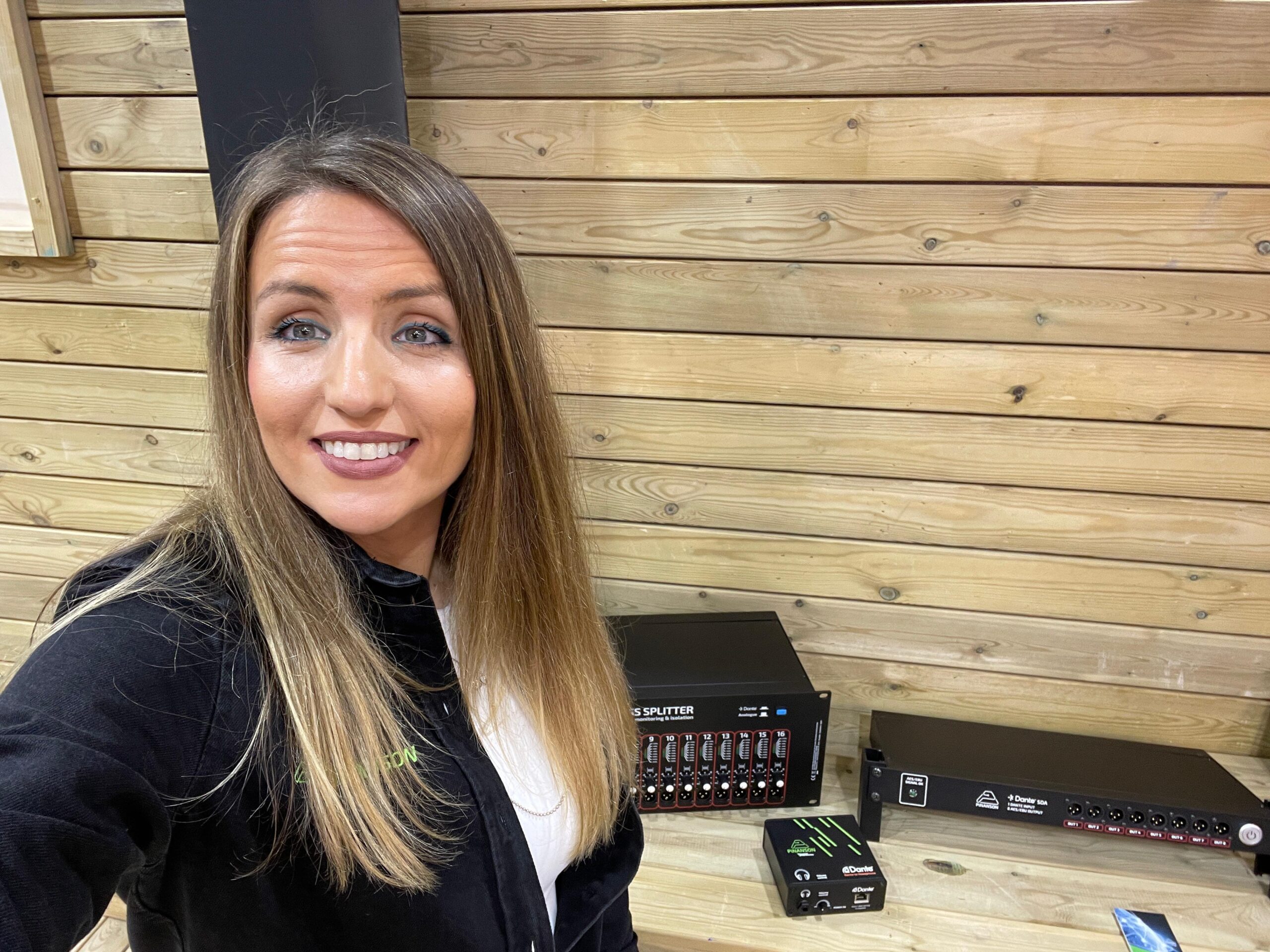
To answer these questions, we asked Elizabeth Sánchez, head of the engineering department at Pinanson:
Pinanson has been designing and manufacturing press splitters for over 25 years, but what exactly is a press splitter and what is its main function?
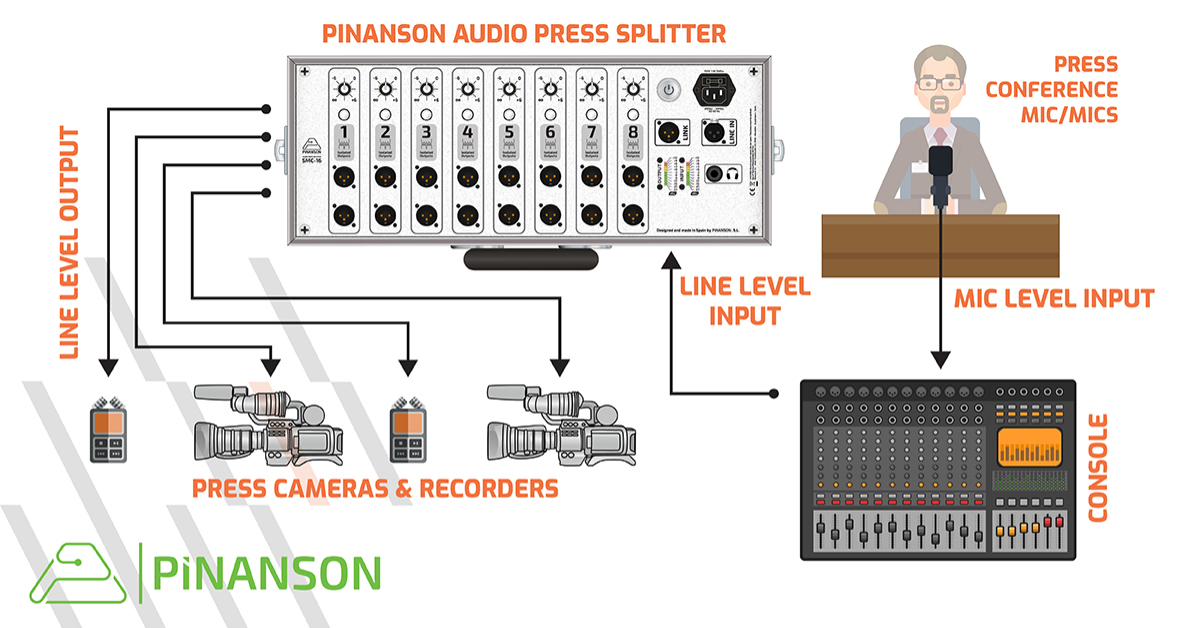
When we have one audio signal (a person speaking) and we want to transmit this signal to several devices (press outlets), we need that single signal to be distributed to multiple receivers. If we want this process to be lossless, without degradation of the audio signal and without problems between devices, the correct (I would say the only) way to do it is with a signal distributor or press splitter.
As a key component in an audio setup, it’s essential to understand how a press splitter affects signal quality during transmission.
Using a press splitter is crucial precisely to prevent audio signal degradation during transmission. Years ago, there was a common belief that transformers could degrade the signal, and indeed, this is true when using low-quality transformers.
When working with professional or broadcast-quality signals, we have no doubt about the type of transformers required and their performance in terms of distortion, frequency response, and insertion loss. This guarantee of high-quality audio and ensuring that “what goes in, goes out” naturally increases the price, as expected.
“The use of a press splitter is necessary precisely to prevent the audio signal from being affected in a transmission.”
We’ve heard about passive and active splitters. What’s the difference between them, and when should you use them?
The difference between an active and a passive splitter lies in whether or not it requires a power source to operate.
Passive splitters distribute the signal using transformers, and “what goes in, goes out.” Therefore, you can’t increase the gain or see the signal level with LEDs. The advantage of this type of splitter is that it’s a self-contained unit that can be placed anywhere and only receives the audio signal from the mixing console in the room. It doesn’t need to be plugged into a power outlet.
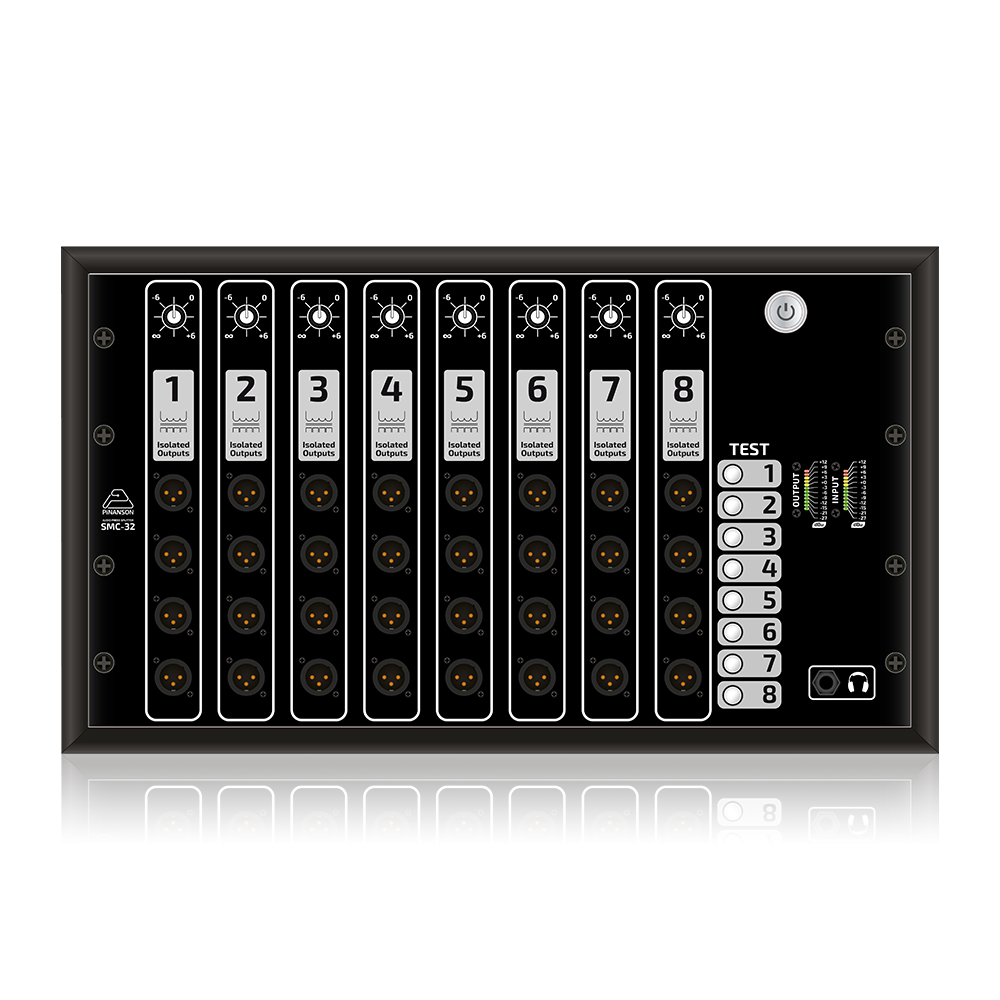
Active splitters operate using a power source. They provide distribution to the outputs, display the input and output signal levels, and allow you to adjust the output signal level using potentiometers, but they always require a power connection.
Regardless of whether they are passive or active, all our press splitters feature transformers at their input and output (their benefits deserve their own post, haha).
Therefore, customers usually choose a passive splitter when they don’t need too many outputs, prefer the freedom to distribute signals without having to connect to a power source, and are completely confident that the signal level will be sufficient for the media (these units are more economical for obvious reasons).
They opt for an active splitter when they need to monitor signal levels, want to offer the media the ability to increase or decrease the output gain, and require more than 16 outputs (up to 32).
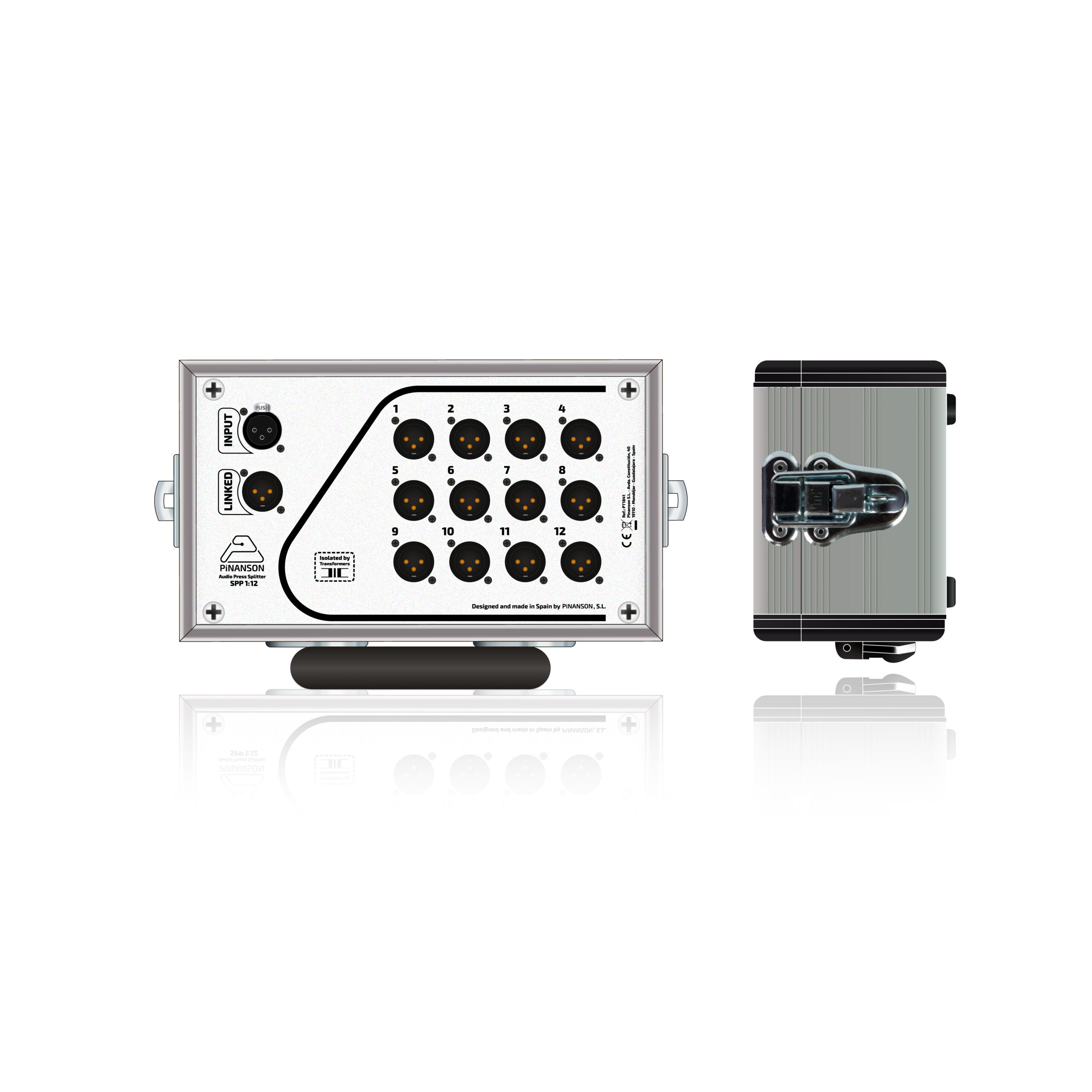
“Passive splitters don’t require power and are ideal for simple setups.”
The number of cameras, recorders, etc. will depend on the press room in question. How many devices can be connected to a press splitter without losing quality?

The number of devices that can be connected is an important factor to consider, especially when using a passive splitter. We don’t manufacture splitters with a number of outputs that could compromise signal quality. Our SPP12-24 model allows for up to 24 passive outputs without signal degradation.
For active devices, the largest unit (in terms of outputs) we manufacture is the SMC32, which can connect up to 32 outputs without any signal quality issues.
Sometimes, the need for an amplifier is mentioned. Is it really necessary to use one with a press splitter?
When we talk about equipment that operates with a line-level signal, the signal comes from a mixing console that already has a good professional line-level signal (greater than or equal to +4dBu), so there’s no need to do anything else with the input signal. If the media devices connected to the equipment’s outputs need more signal (and the equipment is active), they can increase the output gain.
If the equipment receives a microphone signal, then the press equipment must have an additional microphone input with preamplification and phantom power, such as our SPP20 MIC PREAMP or SMC 16 MIC PREAMP.
Is it possible to use a press splitter for different types of signals?
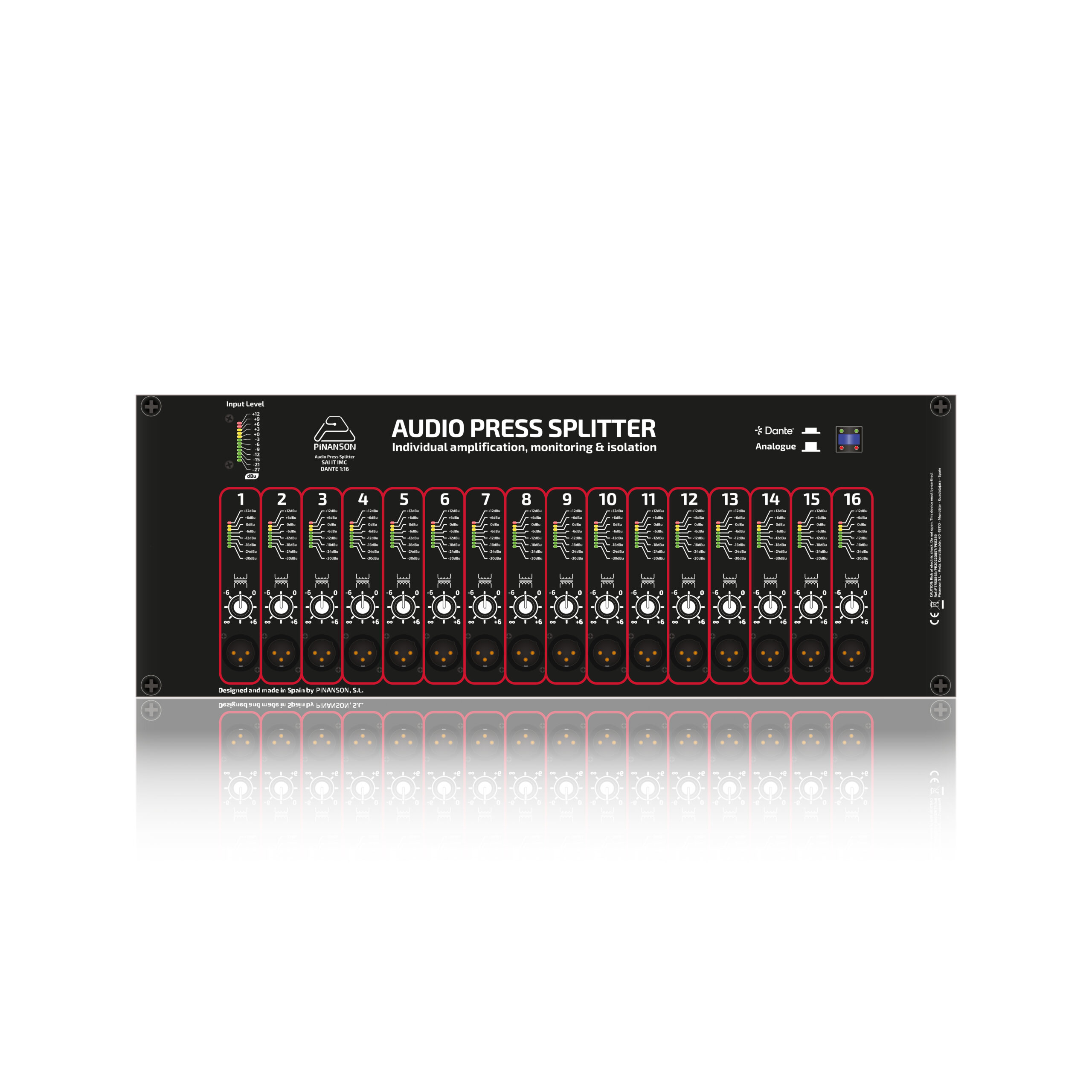
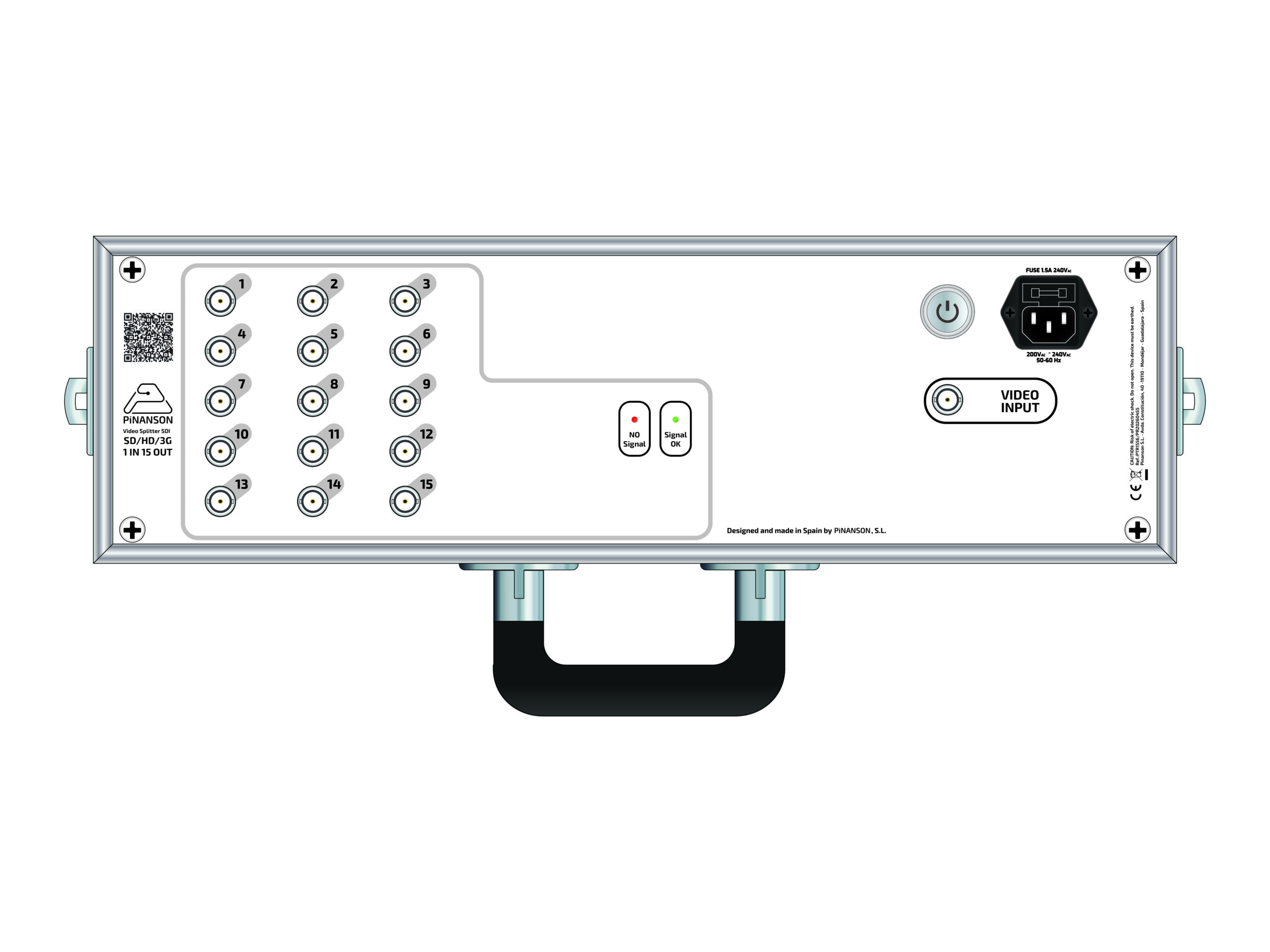
Yes, of course. As I mentioned before, there are press splitters that have both line and microphone inputs. But we also have splitters for Dante network digital signal input (always selectable between analog audio and Dante network) or 3G-SDI digital video signal, from which the audio signal can be de-embedded and then distributed to multiple analog outputs.
In our audio distribution range, we also have AES3 digital audio splitters, although they are not typically used in press rooms.
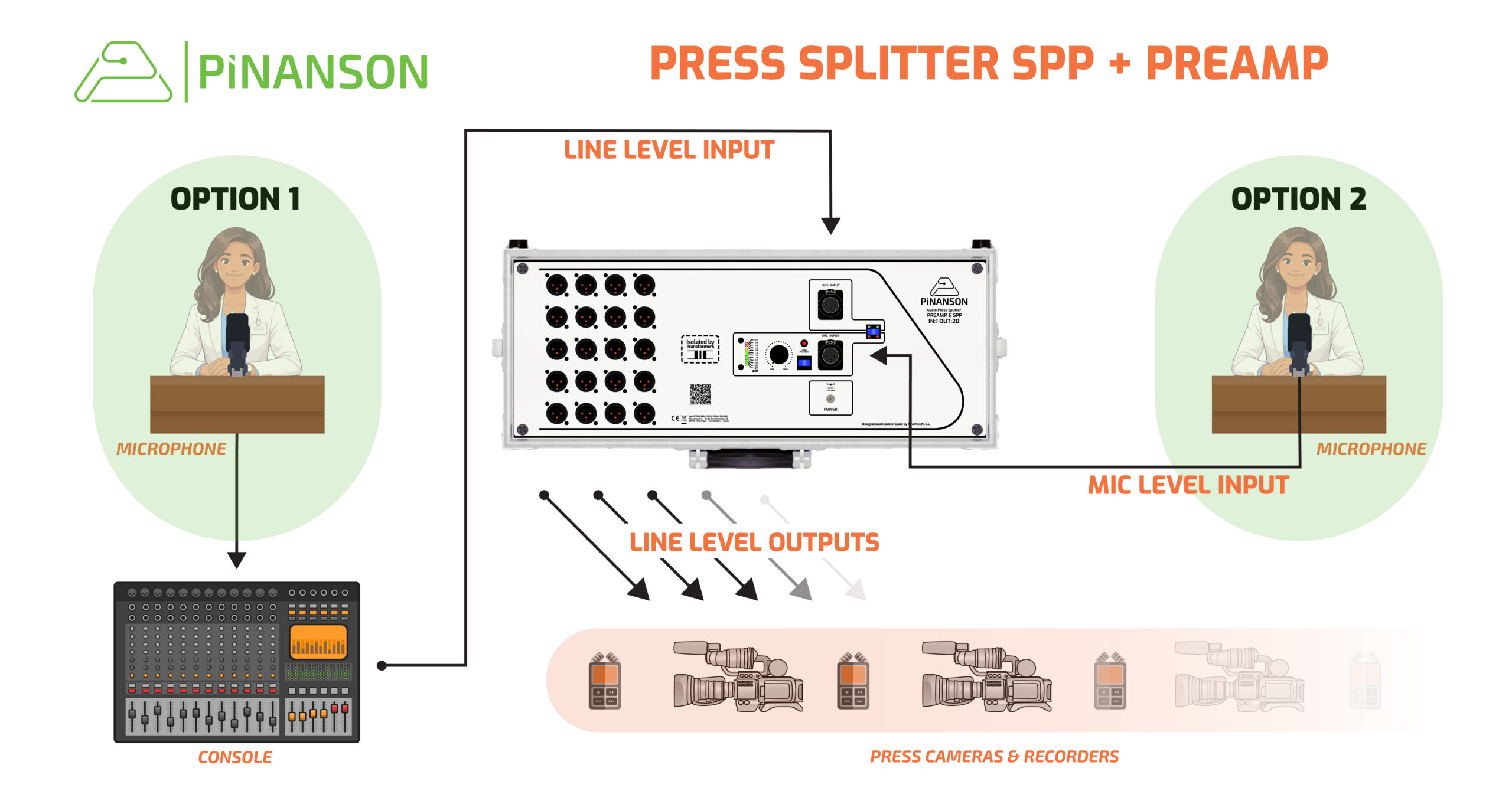
Below you can see press splitters for different types of signal: Mic/Line signal, Dante/Line signal and 3G-SDI Video signal.
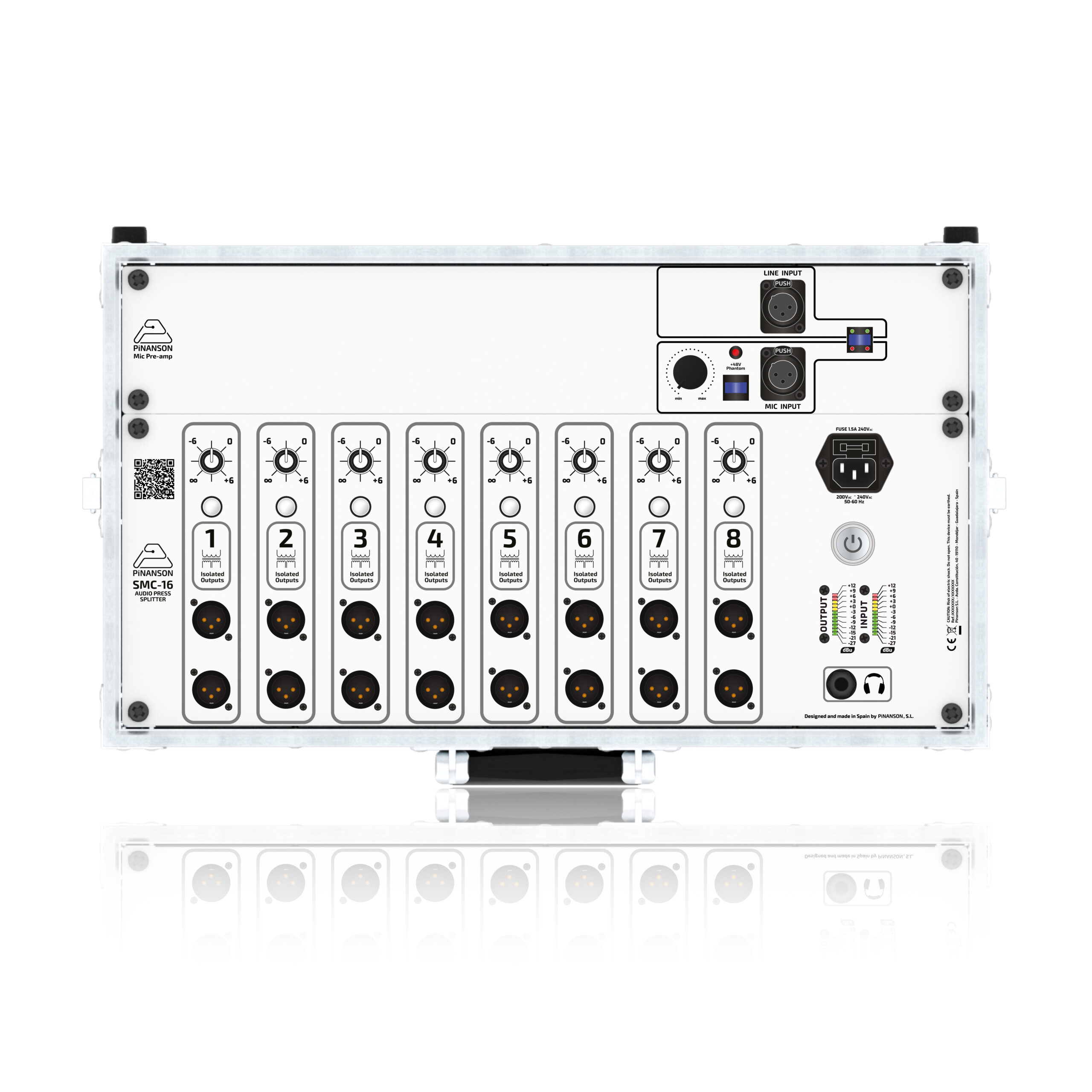
Key points to consider…
- Press splitters distribute an audio signal to multiple receivers without loss of quality.
- The quality of the transformers in audio splitters is crucial for maintaining signal integrity.
- Passive splitters don’t require power and are ideal for simple setups. Active splitters require power and allow for monitoring and level adjustment.
- Models like the SPP12-24 allow up to 24 outputs in passive mode, and the SMC32 up to 32 outputs in active mode, without any loss of quality.
Want a second part of the World of Press Splitters interview?
For PART II, we’ll answer questions like……
- Most common mistakes when using a press splitter.
- Which models do you recommend depending on the application?
- Considerations for large-scale events.
- How do you see the future of press splitters?
And do you have any other questions? Ask us by writing to: elisa@pinanson.eu
“Pinanson, the power of the invisible”